


Can You Refuse a Breath Test in Florida?
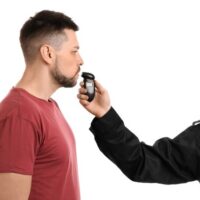
You see the flashing lights in your rearview mirror. Your heart starts racing. Before long, an officer is asking you to take a breath test. In that high-pressure moment, you might wonder: do I actually have to do this? Can I say no? The answer is more complicated than a simple yes or no, and understanding what is at stake could make a significant difference for your future.
What Florida’s Implied Consent Law Actually Means
Florida operates under what is known as an implied consent law. Under Florida Statute § 316.1932, any person who accepts the privilege of driving on Florida roads is considered to have already consented to submit to a lawful chemical or breath test if a law enforcement officer has reasonable cause to believe they are driving under the influence. In plain terms, the moment you got behind the wheel in Florida, you gave your implied consent to be tested if you are lawfully arrested for DUI.
This does not mean you are physically forced to blow into the device. You can physically refuse. But refusal is not without serious consequences, and those consequences begin immediately.
The Real Cost of Saying No
So what happens if you refuse? The penalties can be steep, and as of October 1, 2025, Florida lawmakers made them even steeper. Here is what you are looking at:
- First refusal: automatic one-year driver’s license suspension, and now a second-degree misdemeanor criminal charge under the updated implied consent law.
- Second or subsequent refusal: an 18-month license suspension and a first-degree misdemeanor charge, which can carry up to one year in jail, 12 months of probation, and a fine of up to $1,000.
- Your refusal can be used as evidence against you in a criminal DUI proceeding, which prosecutors may argue shows a consciousness of guilt.
- License suspension penalties apply even if you are never convicted of DUI.
It is worth noting that before October 2025, a first refusal carried only the administrative license suspension with no criminal charge. That loophole is now closed. Refusing a breath test in Florida for the very first time is now a criminal act in addition to an administrative one.
Does Refusing Actually Help Your DUI Case?
Some people believe that refusing a breath test will make a DUI prosecution harder for the state. There is a kernel of truth here. Without a breath result, prosecutors cannot directly point to a blood alcohol concentration above the 0.08% legal limit. However, refusing does not protect you the way you might hope.
Officers are trained to build a DUI case around their observations. Body camera footage, field sobriety test performance, driving behavior, and witness accounts can all paint a compelling picture for a jury without any breath result in evidence. And again, the refusal itself can be introduced in court. Rather than eliminating the state’s case, refusing often shifts the focus while adding new legal jeopardy.
There is one other important point: the roadside handheld device an officer may use during the initial stop is generally a preliminary screening tool, not the official test tied to implied consent penalties. The official test typically takes place at the station or a designated testing location.
Facing a DUI Refusal? Talk to Our Team Today
Whether you took the breath test or refused it, a DUI arrest carries consequences that can follow you for years. That is why it matters who is in your corner. If you have been arrested for DUI or charged in connection with a breath test refusal, we encourage you to reach out right away. Time is critical: you typically have only 10 days after a license suspension to request a formal hearing to contest it.
At Salazar & Kelly Law Group, P.A., our Kissimmee and Orlando DUI defense attorneys are former prosecutors who know how the other side thinks and what it takes to fight back effectively. We have handled thousands of cases in Florida courts and we are ready to put that experience to work for you. Contact Salazar & Kelly Law Group, P.A. today to schedule a confidential consultation at our Kissimmee office.
https://www.flsenate.gov/laws/statutes/2024/316.1932